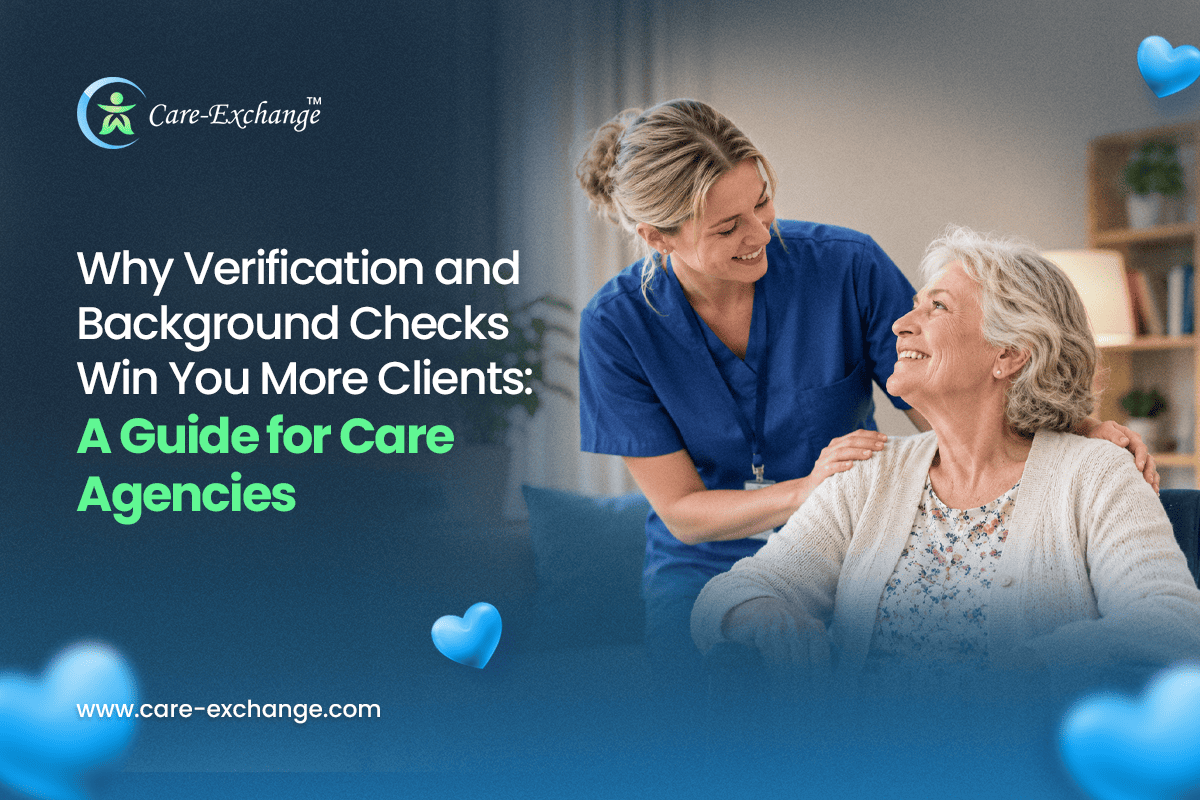
Why Verification and Background Checks Win You More Clients: A Guide for Care Agencies
For home care, families are not comparing only prices. They are handing over the safety of a parent, a spouse, or a grandparent, and they want proof that the person walking through the door can be trusted. For care agencies, that proof is verification.
Across home care services in the USA, demand keeps rising as more older adults choose to stay in their own homes. That growth brings more competition, too. Agencies that screen every caregiver carefully stand out, earn referrals, and keep clients longer. This blog explains why background checks and credential verification are good for safety and good for business.
What Verification Really Means
Verification is more than one quick search. A complete process usually covers several steps:
- Identity and work authorization checks
- Criminal background screening
- Reference calls with past employers or clients
- Certification checks, such as CNA, HHA, CPR, and First Aid
- Interviews that test judgment and communication
Each step answers a question families quietly ask: Is this person who they say they are, and are they safe and skilled? When an agency can say yes with proof, the conversation gets much easier.
5 Ways Verification Helps Agencies Win More Clients
1. Builds Trust Before the First Visit
Families often compare two or three agencies before deciding. The one that clearly explains its screening process feels safer right away. Mentioning verified caregivers on a website, in a brochure, or during an intake call gives families a reason to choose that agency over a vague competitor.
2. Improves Care Quality and Client Retention
A caregiver with confirmed training and a clean record is more likely to deliver steady, safe home care assistance. Better care means fewer complaints, fewer missed shifts, and fewer early cancellations. Since winning a new client costs more than keeping one, strong retention protects revenue.
3. Lowers Risk and Protects the Agency's Name
One incident involving theft, neglect, or misconduct can damage years of hard work. Thorough screening reduces that risk. It also shows insurers, referral partners, and regulators that the agency takes safety seriously, which can support partnerships with hospitals, case managers, and discharge planners.
4. It Attracts Better Caregivers
Good caregivers prefer to work for agencies that value professionalism. When screening is thorough, strong candidates feel they are joining a trusted team. That makes the agency more appealing in the busy market for home care jobs, where skilled workers often choose between several offers. A stronger team then leads to better care and more word-of-mouth referrals.
5. It Speeds Up Hiring and Matching
Verified profiles save time. When credentials and checks are already confirmed, schedulers can match caregivers to client needs faster and fill open shifts with less back-and-forth. Quick, confident matching keeps families happy and keeps caregivers busy.
Simple Ways to Make Screening Part of Your Marketing
Strong screening helps when families know about it. A few easy habits can make it visible:
- Explain the screening steps in plain language
- Display badges or short notes on caregiver profiles
- Share real reviews that mention reliability and safety
- Train staff to answer screening questions during intake calls
- Re-verify certifications and records on a regular schedule
Plain words work best. Families do not need technical terms. They need to hear, "Every caregiver is identity-checked, background-screened, and credential-verified." Short and clear beats long and fancy.
Common Mistakes That Weaken Trust
Even good agencies slip up. Some rely on a single check and skip reference calls. Others verify once at hiring and never again, letting certifications expire unnoticed. Some keep their process secret, so families never learn how careful the team really is. Fixing these gaps is simple and inexpensive compared with the cost of one lost client or one serious incident. A short monthly review can catch most of these issues early.
Conclusion
Verification and background checks are not just paperwork. They are a promise to every family that the agency takes safety seriously. That promise builds trust, improves care, protects the agency's reputation, and brings in more clients through referrals and reviews. In a crowded market, trust is often the deciding factor.
Care-Exchange supports agencies on both sides of that equation. On the hiring side, agencies can post openings and connect with caregivers who have uploaded their credentials and experience, making it easier to build a dependable, well-qualified team. On the client side, families searching for in-home care, nursing professionals, and senior support can browse verified providers and connect with trusted agencies. Agencies that join the provider network get in front of families who are actively looking for care, while the platform's focus on verified credentials helps reinforce the trust those families need.
In short, screening wins clients, and the right platform helps agencies use that advantage. With a clear process, honest communication, and a trusted place to find talent and families, agencies can grow steadily while keeping quality high.
Frequently Asked Questions
What is caregiver verification?
It confirms a caregiver's identity, work eligibility, certifications, references, and criminal history before assigning them to clients.
Why do background checks matter for care agencies?
They reduce safety risks, protect client trust, support referral partnerships, and strengthen the agency's reputation.
Which credentials should agencies verify?
Common checks include CNA or HHA certification, CPR and First Aid training, state licenses where required, and work authorization.
Can verified caregivers help agencies retain clients?
Yes. Skilled, trustworthy caregivers deliver steadier care, which means fewer complaints, fewer cancellations, and longer client relationships.
How can agencies show families they screen caregivers?
Explain the process, display verification notes on profiles, share reviews, and train staff to answer questions confidently.
How can online platforms help care agencies grow?
They help agencies find verified caregivers, post openings, and reach families actively searching for trusted care providers in their area.